Walk down almost any Victorian or Edwardian street in South East London and you will see rows of sash windows. They look the part, but they are awkward to clean: two sashes that slide past each other, a top sash that is often out of reach, and timber frames that do not like harsh products.
This guide covers how to clean sash windows from inside, whether you have modern tilt-in sashes or traditional box sashes on cords and weights. It also covers the tracks, frames and seals, what to do with a sash that has been painted shut, and where DIY stops being sensible. If you want the basics of glass cleaning first, start with our step-by-step guide to cleaning windows.
Know Which Sash Window You Have
Before you start, work out how your sashes move. The method for cleaning a sash window from inside depends almost entirely on whether the sashes tilt or only slide.
Traditional Box Sash Windows
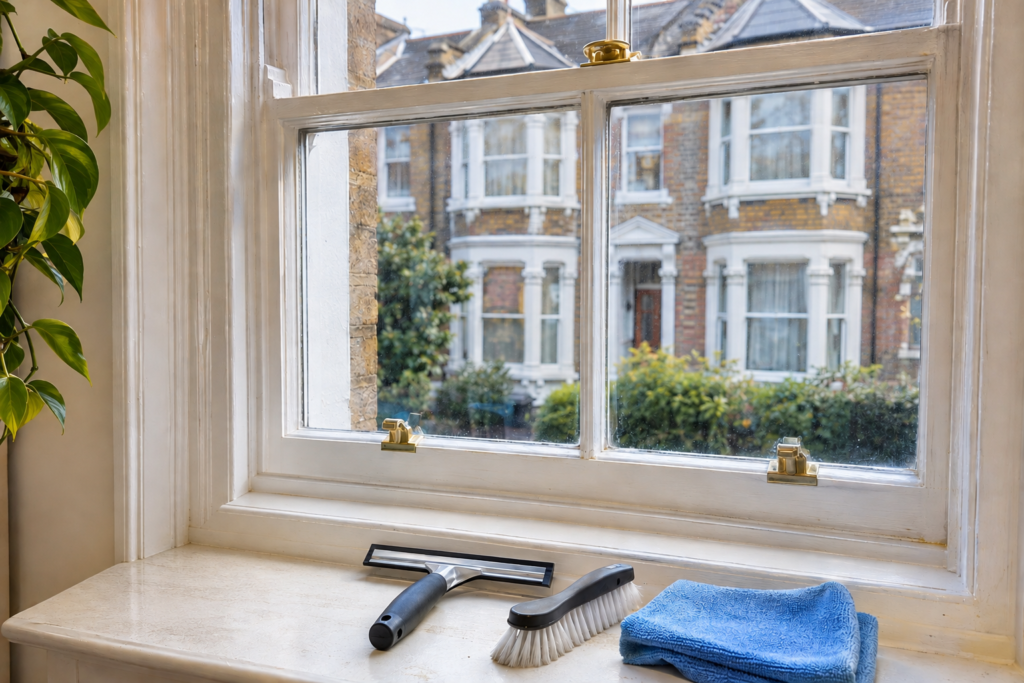
Original Victorian and Edwardian sashes sit in a box frame, with each sash hung on cords that run over pulleys to hidden weights inside the frame. They slide up and down but do not tilt, so you can only reach the outside of the glass by moving the sashes and reaching through the gap. Many have been painted many times over, so they can be stiff or stuck.
Tilt-In Sash Windows
Many replacement sashes, in uPVC and some timber designs, have a tilt function. Small catches or slides on the top of each sash let it pivot inwards, so you can clean both faces of the glass from inside the room. If you see tilt catches on the top rail of the lower sash, you almost certainly have this type.
If you are unsure, check the paperwork that came with the windows or look for a manufacturer's name on the frame. Never force a sash to tilt if it was not designed to, as you can damage the frame or pull a cord off its pulley.
What You Need Before You Start
You do not need specialist kit to clean sash windows from inside. A short list of the right things makes the job quicker and avoids marks on old paintwork.
- Bucket of warm water: with a small amount of washing-up liquid, enough to lift dirt without leaving a film.
- Microfibre cloths: one for washing and at least two dry ones for buffing, as cotton tea towels leave lint behind.
- Small squeegee: sized to fit the panes, which on Georgian-style glazing bars can be quite small.
- Soft brush or old toothbrush: for corners, glazing bars and the edges where dirt collects.
- Vacuum with a nozzle attachment: to clear dust and dead insects from tracks and sills before you get anything wet.
- Silicone spray: a light, colourless lubricant for the tracks once they are clean and dry.
Pick a dull, dry day if you can. Direct sun dries the glass before you can wipe it, which is one of the main causes of streaks, as we explain in our guide to cleaning windows without streaks.
Step by Step: Cleaning Tilt-In Sash Windows From Inside
Tilt-in sashes are the easiest type to clean, because both sides of the glass come to you. Work on the lower sash first, then the upper one.
- Clear the area: open curtains fully, lift blinds out of the way and move anything off the sill.
- Vacuum first: run the nozzle along the sill, the tracks and the brush seals so loose dust does not turn into a smear.
- Tilt the lower sash: unlock the window, raise the lower sash a few centimetres, then slide the tilt catches inwards and ease the sash towards you until it rests in its tilted position.
- Wash and dry the outer face: wipe the glass with your soapy cloth, squeegee from top to bottom, then buff the edges with a dry microfibre.
- Return and tilt the upper sash: push the lower sash back upright until the catches click, lower the upper sash, then tilt it in the same way and clean its outer face.
- Clean the inner faces: once both sashes are back in place and locked, clean the inside of the glass and wipe down the frames.
Check that each sash has clicked fully back into its runners before you lock it. A sash that is not seated properly can drop or let in draughts.
Step by Step: Cleaning Traditional Box Sashes From Inside
Box sashes take more patience, because you have to move the sashes to reach different parts of the outside glass. The aim is to reach what you can from a safe, standing position and leave the rest.
- Clean the inside first: wash and dry the inner face of both sashes while they are closed, so you are not leaning over wet glass later.
- Lower the top sash: pull it right down so it sits in front of the lower sash. You can now reach over it to clean the upper part of its outer face.
- Raise the bottom sash: push the lower sash up and pull the top sash back up behind it. The outer face of the lower sash is now reachable from below through the opening.
- Use a long-handled tool: a small window brush or microfibre pad on a short handle reaches further than your arm, without you leaning out of the window.
- Close and check: return both sashes, fasten the catch and check the glass from outside for any patches you missed.
On most box sashes there will be a strip of outside glass you cannot reach, particularly on the top sash. That is normal, and it is not worth climbing onto the sill to get it.
Tracks, Frames, Cords and Draught Seals
The glass is only part of the job. Clean tracks and frames help the sashes slide properly and stop dirt from working its way back onto the glass.
Sash Tracks and Pulley Cords
Vacuum the side tracks, then wipe them with a damp cloth and let them dry. A light coat of silicone spray afterwards helps the sashes run smoothly without attracting dust the way oil does. Keep water and cleaning products away from the cords, and if a cord looks frayed or worn, have it replaced before it snaps.
Painted Wooden Frames
Wipe timber frames with a well-wrung cloth and mild soapy water, then dry them straight away. Avoid solvents, bleach and abrasive pads, which can strip or scuff the paint and leave bare wood open to moisture. If you have replacement uPVC sashes, our guide to cleaning uPVC window frames and sills covers what is safe to use.
Draught Seals and Brush Pile
Many sashes have brush strips or rubber seals fitted to cut draughts. Brush them gently or vacuum them rather than soaking them, and check that none have come loose. Winter is when worn seals are most noticeable, so it is a good time to look.
Painted-Shut and Sticking Sashes
Older sash windows are often painted shut, or so stiff that the top sash will not move at all. Forcing it is the quickest way to crack a pane or snap a cord.
If a sash is stuck with paint, you can carefully run a sharp blade along the paint line between the sash and the frame, inside and out, then try easing it with steady, even pressure. If it still will not move, or the timber feels soft and crumbly, leave it and ask a sash window repairer to look at it. In the meantime, the outside of a fixed top sash can still be cleaned from the ground with a water-fed pole.
Sashes also tend to stick more in winter, when timber takes on moisture and swells slightly. A sash that runs freely in summer but jams in November may only need its tracks cleaning and a little lubricant.
Safety: Upper Sashes and High Windows
The biggest risk with sash windows is the temptation to sit on the sill or lean out to reach the outside of the top sash. Please do not. It only takes a slip or a sash dropping unexpectedly for a simple cleaning job to become a serious fall.
- Keep your feet on the floor: do not stand on chairs, stools or the sill itself to reach higher glass.
- Leave restrictors in place: if your windows have child safety restrictors, keep them on and clean within the gap they allow.
- Check the cords before you start: a sash with a broken cord can drop suddenly, so do not put your hands under it.
- Stay off ladders on upper floors: outside glass on first and second floor sashes is not a job for a household ladder, as our guide to cleaning outside windows you can't reach explains.
This is where a professional clean makes sense. We clean sash windows on Victorian and Edwardian homes across the area with our Reach & Wash purified water system, working from the ground with a water-fed pole, so upper sashes, frames and sills are done without anyone leaning out of a window. You can read more about how we work on our residential window cleaning page.
Plenty of homes in our area have original sashes, from the terraces around Bromley to the bay-fronted houses in Beckenham. If you would rather keep the inside to yourself and leave the outside to us, call 07454 066644. Customers on our round get a text between 6 and 7pm the evening before, and if you are not happy with the result we come back the same or the following day and clean again free of charge.