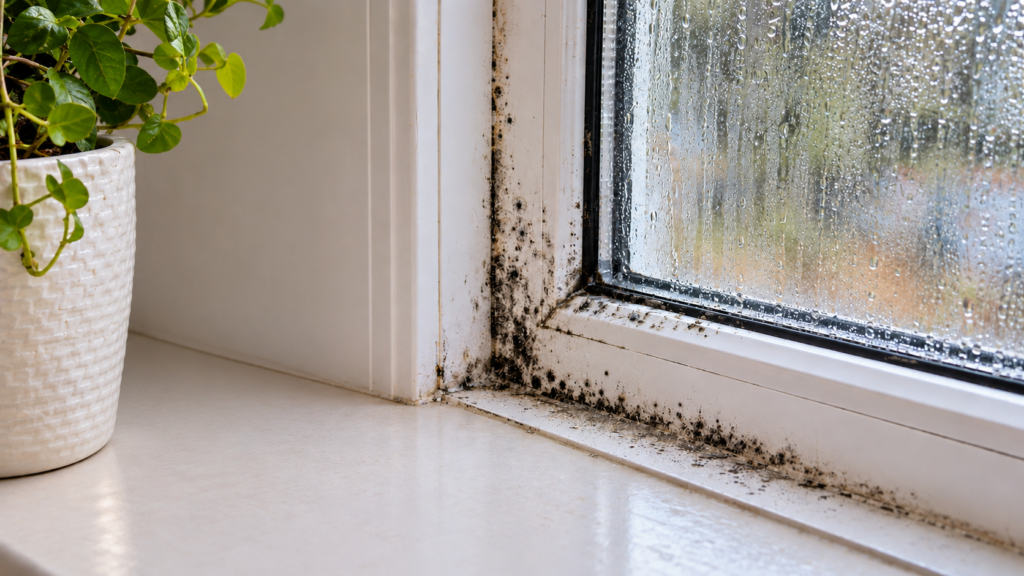
As the heating goes on and the windows stay shut, small black spots start to appear in the corners of the glass, along the rubber seals and in the dip of the sill. Left alone, they spread and become harder to shift. This guide covers where the mould comes from, how to remove it safely and what helps stop it returning.
It focuses on the window itself: seals, frames, sills and glass. If you want the wider basics of kit and technique first, start with our guide on how to clean windows step by step.
Why Black Mould Grows on Windows
Mould needs moisture, something to feed on and still air. Windows give it all three. Glass and frames are usually the coldest surfaces in a room, so moisture in the air settles on them first and runs down into the seals and sill.
Dust, skin cells, cooking grease and soap residue collect in the same places. That thin layer of grime is food for mould spores, which are present in almost every home. Add a bedroom or bathroom where the window is rarely opened, and the conditions are ideal.
Where It Usually Starts
- Rubber seals and gaskets: the soft, slightly porous surface holds moisture and is hard to wipe fully dry.
- Silicone sealant: the bead between frame and wall or sill can stain deep into the silicone.
- Sill corners: water pools here, especially on sills with a lip or a dip.
- Frame joints and drainage slots: small gaps trap dirt and stay damp.
- Behind curtains and blinds: fabric close to cold glass keeps the air still and damp.
Signs It Is More Than Condensation
Spots that appear in winter and wipe away are usually down to everyday moisture. Mould that keeps coming back fast, shows up on several windows, or sits next to peeling paint, puddles or gaps in the sealant can point to a leak or a badly fitted frame. Homebuilding & Renovating suggests checking for these signs early, because cleaning alone will not fix a building fault.
Is Black Mould on Windows Dangerous?
A few spots on a seal are not a cause for panic, but mould is worth dealing with rather than ignoring. Government guidance on the health risks of damp and mould in the home says it mainly affects the airways and lungs. It can trigger or worsen asthma and other breathing conditions.
The same guidance lists people more at risk: those with asthma or other lung conditions, weakened immune systems, children, older people and pregnant women. If anyone in the home has symptoms you are worried about, speak to a health professional. If you rent and the mould keeps returning, report it to your landlord in writing.
What You Need Before You Start
You do not need specialist kit for small patches. Most of it is already under the sink.
- Rubber gloves and a mask: Stafford Borough Council also recommends goggles without vent holes, since cleaning can release spores.
- Warm water and washing-up liquid: the first thing to try on any frame or seal.
- White vinegar: diluted with water, it works well on light mould. Our test of homemade window cleaners covers where vinegar helps and where it falls short.
- Bicarbonate of soda: mixed into a paste for stubborn spots on silicone.
- Soft cloths, cotton buds and an old soft toothbrush: for seals, corners and drainage slots.
- Kitchen roll or disposable cloths: so you can throw away anything that has picked up mould.
- A specialist mould spray (optional): check the label says it is safe for uPVC and seals, and test it on a hidden area first.
Step by Step: How to Get Rid of Black Mould on Windows
Pick a dry day if you can, so the room airs out while you work. Open the window, but keep the room door shut so spores do not drift through the house.
- Clear the area: move curtains, blinds and anything on the sill out of the way. Lay an old towel under the window to catch drips.
- Wipe, do not brush: dry brushing throws spores into the air. Use a damp cloth or kitchen roll to lift off the loose surface mould, then throw it away.
- Wash with warm soapy water: clean the frame, sill and seals with washing-up liquid and warm water. This removes the grime the mould feeds on and is often enough for light spots.
- Treat what is left with diluted vinegar: mix white vinegar and water in equal parts and apply it to the stained areas. Leave it for around ten minutes on uPVC, then wipe off. Do not leave vinegar sitting on seals for long, as prolonged contact can break silicone down.
- Use a paste on stubborn silicone: mix bicarbonate of soda with a little vinegar, work it into the sealant with a soft toothbrush and rinse it off.
- Rinse and dry thoroughly: wipe everything with clean water, then dry the seals, corners and drainage slots completely. Leaving them damp gives the mould a head start.
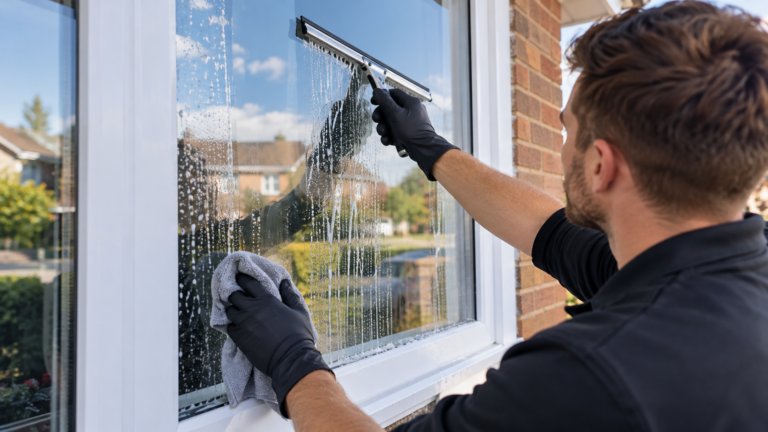
- Clean the glass last: once the frame is done, clean the pane so you are not wiping dirty water back onto it. Our guide to cleaning windows without streaks covers the finish.
Wooden and Painted Frames
Painted timber can take the same soapy water and vinegar approach. Homebuilding & Renovating suggests diluted bleach only as a last resort on timber and painted sills, as it can lighten the paint. If mould has got into bare or rotten wood, the frame will need sanding, treating and repainting, or repair by a joiner.
Mistakes That Damage Frames and Seals
Most damage comes from reaching for something too strong. uPVC and rubber seals are tougher than they look in everyday use, but harsh products shorten their life.
- Bleach on uPVC and seals: it can discolour the plastic and weaken rubber and silicone. Keep it off modern frames.
- Abrasives and solvents: scouring powder, wire wool, white spirit and WD40 can scratch or dull the surface.
- Dry brushing or vacuuming without care: both can spread spores. If you vacuum afterwards, empty the vacuum outside.
- Painting over mould: it will grow back through the paint. Clean and dry the surface first.
- Cleaning and forgetting: without changes to moisture and airflow, the mould returns within weeks.
When the Sealant Needs Replacing
If the black marks are still there after cleaning, the mould has usually grown into the silicone itself. At that point, cutting out the old bead and running a new one gives a cleaner result than more scrubbing. The same goes for seals that have split, shrunk or come away from the frame.
How to Stop Black Mould Coming Back
Removing mould is a temporary fix unless you deal with the moisture. A few daily habits make a real difference.
- Open windows for a short time each day: even ten to fifteen minutes in the morning lets damp air out.
- Keep trickle vents open: the small vents at the top of many uPVC frames are there for constant background airflow. Clean them now and then so they do not clog.
- Wipe condensation in the morning: a cloth or window vacuum on the glass and sill stops water soaking into the seals.
- Use extractor fans: run them during and after cooking and showers.
- Dry washing outside or in a ventilated room: clothes drying on radiators add a lot of moisture to the air.
- Leave a gap behind curtains: let air reach the glass rather than trapping it behind heavy fabric.
- Keep frames and sills clean: less grime means less for mould to feed on.
Why Clean Outside Frames Help Too
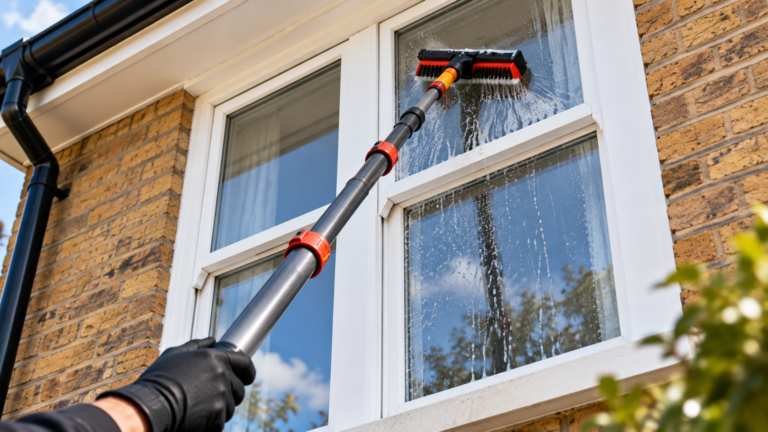
Mould is mostly an indoor problem, but outside frames and sills collect dirt, algae and green growth that hold water against the window. Keeping them clean means drainage slots stay clear and water runs off rather than sitting in the joints.
That is part of every visit on our round. We use a vehicle-mounted Reach & Wash purified water system with a water-fed pole, worked from the ground, and frames, sills and door panels are included as standard. We cover homes across the borough, from window cleaning in Bromley to regular rounds in Orpington and nearby areas.
When to Get Help
Small patches on seals and sills are a DIY job. Mould that covers a large area, keeps returning quickly after cleaning, or comes with damp walls or water coming in points to a problem cleaning will not fix. In that case, a builder, a window fitter or, if you rent, your landlord needs to look at the cause.
For the outside of your windows, frames and sills, we are a family-run, fully insured business with 15 years of experience. Customers on our round get a text between 6 and 7pm the evening before, and if you are not happy with a clean, we come back the same or following day to re-clean it free of charge. Call 07454 066644 or have a look at our residential window cleaning service.