Most of us have a bottle of white vinegar and some washing-up liquid in the kitchen, so it is no surprise that homemade window cleaner recipes are so popular. They are cheap, they smell less of chemicals than many shop-bought sprays, and the bottle can be refilled again and again. The real question is whether they leave glass clear or just move the dirt around.
In this guide we look at the three classic options: vinegar, washing-up liquid and the old newspaper trick. You will find simple recipes, a step by step method and the situations where a home mix stops being the right tool. If you are new to cleaning your own glass, our step-by-step guide to cleaning windows covers the kit and basic technique first.
What Makes a Good Window Cleaner?
Whatever is in the bottle, a window cleaner has two jobs. It needs to loosen grease, fingerprints and traffic film, and it then needs to come off the glass completely. Anything left behind, whether that is soap, minerals from tap water or fluff from a cloth, shows up as smears once the sun hits the pane.
That is why the method matters as much as the mixture. A mild solution, a clean microfibre cloth and a dry finish will beat a strong cleaner wiped on with an old tea towel. Our post on how to clean windows without streaks explains in more detail why marks appear.
Three Homemade Window Cleaner Recipes
These are the mixes that appear again and again in UK cleaning guides. Each one suits a slightly different job, so pick the one that matches how dirty your windows are.
Vinegar and Water
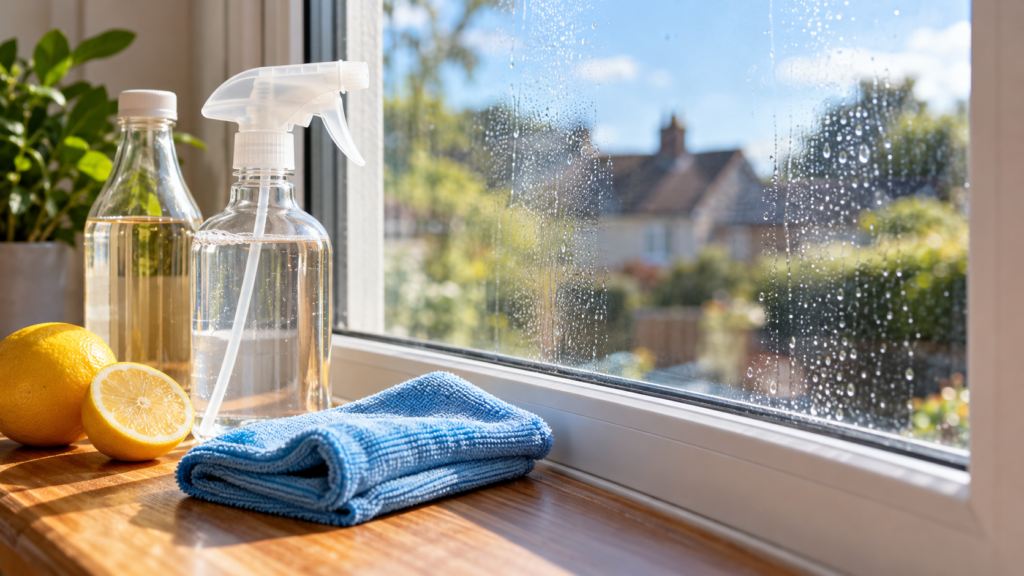
This is the simplest homemade window cleaner solution and the one most people start with. Some recipes use equal parts vinegar and water, while others use a much weaker mix of around a quarter of a cup of vinegar to two cups of water.
- Ingredients: white vinegar and water, plus a few drops of essential oil if you want to soften the smell.
- Best for: fingerprints, light dust and the general film that builds up on inside glass.
- Tip: start with the weaker mix and only make it stronger if the glass still feels greasy.
Vinegar With a Drop of Washing-Up Liquid
Adding a small amount of washing-up liquid helps the mix cut through grease, which makes it handy for kitchen windows and outside glass. The key word is small, as around half a teaspoon in a large spray bottle is plenty.
- Ingredients: two cups of warm water, a quarter of a cup of white vinegar and about half a teaspoon of washing-up liquid.
- Best for: greasy kitchen panes, sticky handprints and outside glass with a layer of grime.
- Tip: too much soap is the most common cause of smears, so rinse the glass with clean water if you overdo it.
Lemon Juice Instead of Vinegar
If you cannot stand the smell of vinegar, lemon juice is the usual swap because it is also mildly acidic. A couple of tablespoons in a cup of water is enough for light cleaning.
- Ingredients: water and fresh or bottled lemon juice.
- Best for: mirrors and inside glass with light marks.
- Tip: make it in small batches, as a lemon mix does not keep as long as a vinegar one.
Step by Step: How to Clean Windows With Vinegar
A good mix only works if you use it well. This method works for any of the recipes above.
- Pick your moment. Clean on a dull day or when the window is in shade, because direct sun dries the solution before you can wipe it off.
- Dust first. Brush or vacuum loose dirt and cobwebs from the frame and sill so you are not turning dust into mud.
- Mix in a clean bottle. Use a spray bottle that has not held bleach or other strong chemicals, and label it.
- Spray lightly. A fine mist is enough, and on smaller panes you can spray the cloth rather than the glass.
- Wipe in one direction. Use a clean microfibre cloth, working from the top of the pane down.
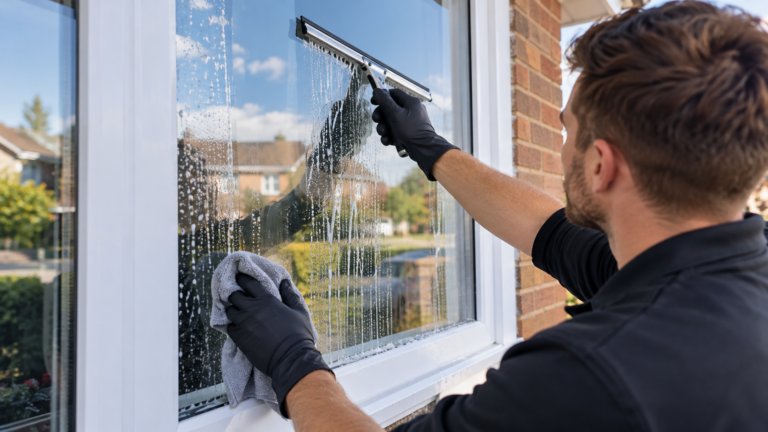
- Dry and buff. Finish with a second dry microfibre cloth or a squeegee, then check the glass from an angle for missed spots.
Remember to wipe the frames and sills as you go, as dirty water running off them is a common reason clean glass looks marked a day later. Rinse your cloths in clean water between windows too, so you are not spreading old grime onto the next pane.
Does the Newspaper Trick Still Work?
Buffing glass with scrunched-up newspaper is a tip many people learned from their parents. The paper is firm, does not leave fluff, and absorbs the last of the moisture, which is why it became so popular.
The catch is that it depends on the paper. Newsprint can leave ink on your hands and on white uPVC frames, and fewer households have a daily paper lying around. A clean, dry microfibre cloth does the same job without the mess and can go in the wash afterwards.
Where Homemade Window Cleaners Fall Short
Vinegar mixes are good for routine cleaning, but they are not a cure-all. Knowing their limits saves you time and protects your windows and sills.
- Hard water marks: if you mix your cleaner with tap water, the minerals in it can dry as small spots. Some guides suggest distilled or cooled boiled water to reduce this.
- Heavy dirt: outside glass that has gone months without a clean, or windows near a busy road, usually need more than a spray and a wipe.
- Stone and special finishes: vinegar is acidic, so keep it off marble or limestone sills and check the manufacturer's advice for tinted film or coated glass.
- Screens: vinegar is not suitable for TV and computer screens, which have coatings of their own.
- Height: no recipe makes an upstairs window safer to reach, and leaning out or balancing on a ladder is where most of the risk lies.
One safety point is worth repeating. Never mix vinegar with bleach, because the combination releases chlorine gas.
How Professionals Get Streak-Free Glass Without Chemicals
The idea behind a homemade window cleaner is to use something mild and leave nothing behind on the glass. Purified water takes that idea one step further. Water that has had its minerals removed dries clear, so there is no soap, vinegar or residue left on the pane at all.
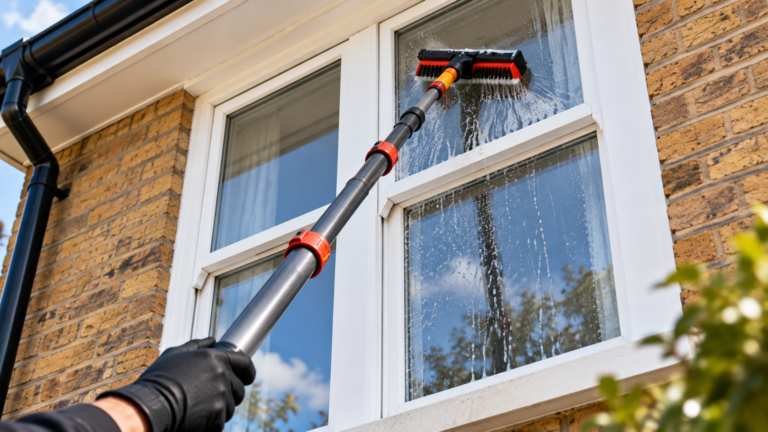
Our Reach & Wash pure water cleaning uses a vehicle-mounted system and a water-fed pole, so we clean from the ground, including high and hard-to-reach windows. Frames, sills and door panels are included in every clean. If you are wondering how this works for upper floors, our guide to cleaning outside windows you can't reach explains the method.
When to Put the Spray Bottle Down
A homemade cleaner is ideal for keeping inside glass, mirrors and easy ground-floor windows tidy between proper cleans. It makes less sense when the job involves ladders, upstairs windows or glass that never seems to come up clear, however much you buff.
Red Point is a family-run, fully insured business that has been cleaning windows across South East London for 15 years. Customers on our regular round get a text between 6 and 7pm the evening before, and we clean the next day, weather permitting. If you are not happy with the result, we come back the same or the following day and clean again at no charge.
We cover homes across the area, including our window cleaning round in Bromley and regular work for homes in Orpington. You can find out more about our residential window cleaning service, or call us on 07454 066644 to join the round.