uPVC frames are low maintenance, but they are not no maintenance. Traffic dust, garden grime, spider webs and green algae build up on the frames and sills, and the hinges and drainage slots collect grit that can stop a window closing properly. Left long enough, the dirt bakes on and the frames start to look tired even when the glass is clean.
The good news is that frames are easier to clean than glass, as long as you avoid the products that damage plastic. This guide covers the outside and inside of the frame, sills, seals, hinges and uPVC doors. If you want to clean the glass as well, our step-by-step guide to cleaning windows covers the kit and method.
What You Need to Clean uPVC Frames
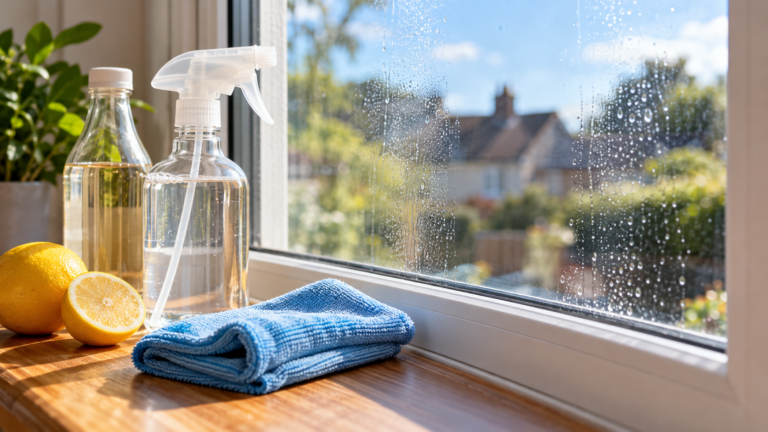
You do not need a specialist kit. Most of what works is already under the kitchen sink.
- A bucket of warm water: warm rather than hot, with a small squeeze of washing-up liquid.
- Soft cloths or a non-scratch sponge: microfibre cloths are ideal, plus a dry one for finishing.
- A soft brush: a dustpan brush or paintbrush for loose dirt and cobwebs.
- An old toothbrush: for corners, hinges, drainage slots and the edges of the rubber seals.
- A vacuum with a brush attachment: the quickest way to clear grit from hinges and tracks.
- A dedicated uPVC cleaner (optional): for stubborn marks or dull, greying frames. Always test it on a hidden area first.
What Not to Use on uPVC
uPVC has a smooth, slightly glossy finish, and that finish is what keeps dirt from sticking. Once it is scratched or dulled, the frame marks more easily and cannot be polished back. Window makers such as Anglian and Everest warn against the following.
- Scouring pads and wire wool: these leave fine scratches that hold dirt and look grey.
- Cream cleaners and scouring powder: they are abrasive, even when they feel smooth.
- Bleach: it can turn white uPVC brown or yellow and weakens rubber seals.
- Solvents: white spirit, methylated spirits, nail varnish remover and cellulose thinners can soften or mark the plastic.
- WD40: keep it off the frames, and use a light multi-purpose oil on hinges instead.
- Glass cleaner on the frames: many contain ammonia or alcohol, which is fine on glass but not on plastic.
Step by Step: How to Clean uPVC Window Frames
Pick a dry, overcast day if you can. Sunshine dries soapy water onto the frame before you can rinse it, which leaves smears.
- Brush off loose dirt: start with a dry brush to remove dust, leaves and cobwebs. Wiping a dusty frame with a wet cloth just turns the dust into a grey paste.
- Vacuum the corners: open the window and run the brush attachment along the hinges, the frame rebate and the bottom of the frame where grit settles.
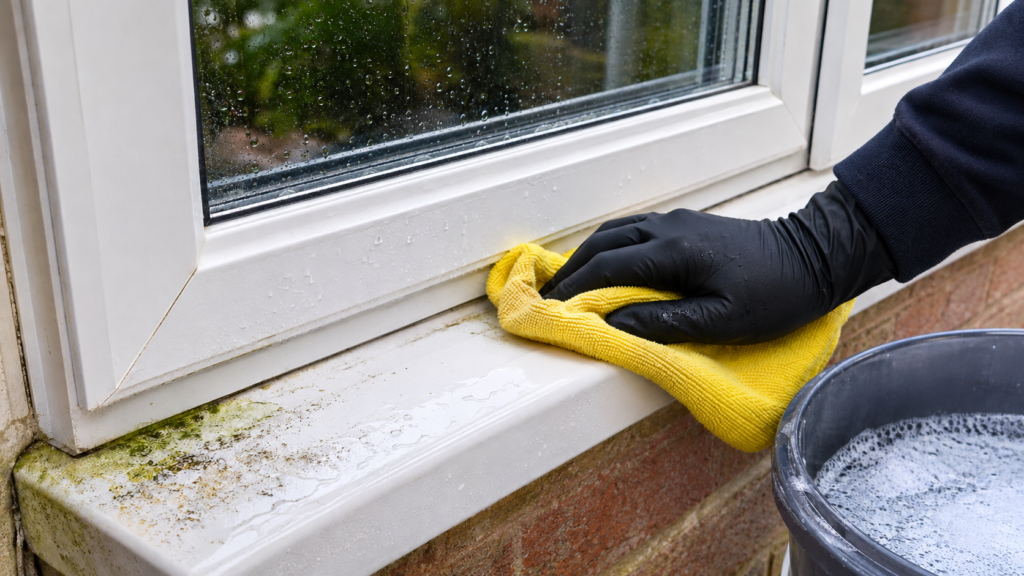
- Wash with soapy water: wipe the frame from the top down with a well-wrung cloth, so dirty water does not run over the parts you have already cleaned.
- Work on stubborn marks: leave soapy water on stubborn spots for a few minutes, then go over them with the toothbrush. Use a uPVC cleaner only where soapy water has not worked.
- Rinse with clean water: wipe the frame again with clean water and a fresh cloth so no detergent is left behind to attract dirt.
- Dry and buff: finish with a dry microfibre cloth. This removes water marks and shows you any spots you have missed.
How to Clean uPVC Window Frames Inside
The inside of the frame gets less weather but more of everything else: cooking grease, dust and condensation running down from the glass. The method is the same as outside, with a little more attention to the parts you only see when the window is open.
Hinges and Friction Stays
Open the window only as far as it goes without force. Vacuum the hinges and the sliding stays, then clean them with a damp toothbrush and dry them well. If a window feels stiff, a few drops of light multi-purpose oil on the moving parts usually helps, wiped off where it touches the frame.
Rubber Seals and Gaskets
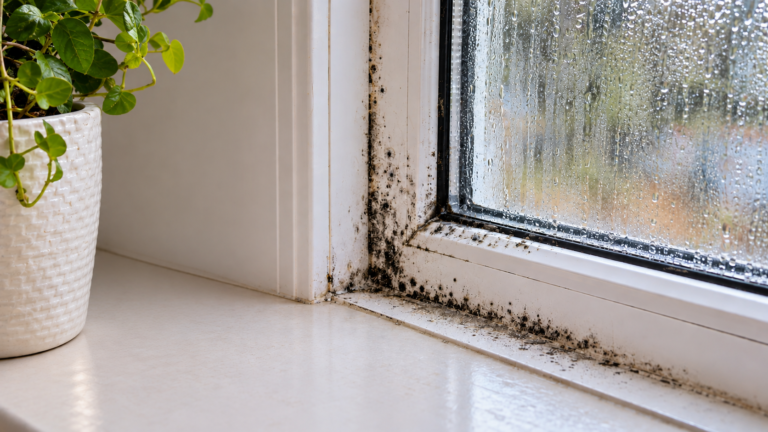
The black rubber seals around the glass and the opening sash keep out draughts and rain, so treat them gently. Wipe them with soapy water and a soft cloth, and avoid bleach, solvents and long soaks in vinegar. If you find black spots on the seals, our guide to removing black mould from windows explains how to treat it without damaging the rubber or silicone.
How to Clean uPVC Window Sills
Sills collect more dirt than any other part of the window, because rainwater runs down the glass and leaves everything on the ledge. Brush off loose debris first, then lay a soapy cloth over the sill for a few minutes to soften baked-on grime before you wipe it. Rinse and dry as you would the frame.
Inside sills often hold plants, ornaments and pooled condensation. Clear them, wipe them, and dry the corners properly, as damp corners are where mould tends to start.
Drainage Slots
Most uPVC windows have small slots along the bottom of the outer frame, often behind little plastic covers. They let rainwater out of the frame. If they block with dirt or insects, water can sit inside the frame or spill back over the sill. Clear them gently with a soft brush or a pipe cleaner, and do not push anything sharp into them.
How to Clean uPVC Doors
uPVC doors need the same care as windows, and the same products. Vacuum the hinges and the frame, brush off loose dirt, wash with warm soapy water from the top down, then rinse and dry.
Door Panels
Front and back door panels pick up handprints, splashes from the path and green algae near the ground. A soft sponge and soapy water deal with most of it, and a dedicated uPVC cleaner can help with grey streaks. Textured or woodgrain-effect panels hold dirt in the grain, so use a soft brush rather than pressing harder with a cloth.
Handles, Letterbox and Threshold
Wipe handles and the letterbox with a damp cloth and dry them, as most are metal or coated metal and do not need anything stronger. The threshold at the bottom of the door collects grit that wears the seal, so vacuum it and wipe it whenever you clean the door.
What to Do About Yellowed or Discoloured Frames
Not all discolouration is dirt. A frame that looks grey or patchy is usually just dirty, and a uPVC cleaner followed by a buff with a dry cloth often brings it back. Work in small sections and keep the product out of direct sun so it does not dry on the surface.
True yellowing is different. Older or lower-grade uPVC can yellow with age and sunlight, and window makers such as Everest say there is little that restores whiteness when the plastic itself has changed. Scrubbing harder or using bleach only makes it worse, so if a frame stays yellow after a proper clean, it is the material rather than the cleaning.
How Often to Clean uPVC Frames
A quick wipe whenever the glass is cleaned keeps frames from getting to the stage where they need scrubbing. Everest suggests a full clean every three months for homes in towns and cities, and twice a year in rural areas. Houses on busy roads, under trees or near building work will need it more often.
Inside frames are worth a quick check through the colder months, when condensation runs onto the sills. Drying them in the morning takes a minute and stops most mould problems before they start.
Leave the Outside Frames to Us
Ground-floor frames are an easy job on a dry afternoon. Upstairs frames, bay windows and sills over a conservatory are a different matter, and that is where most people stop.
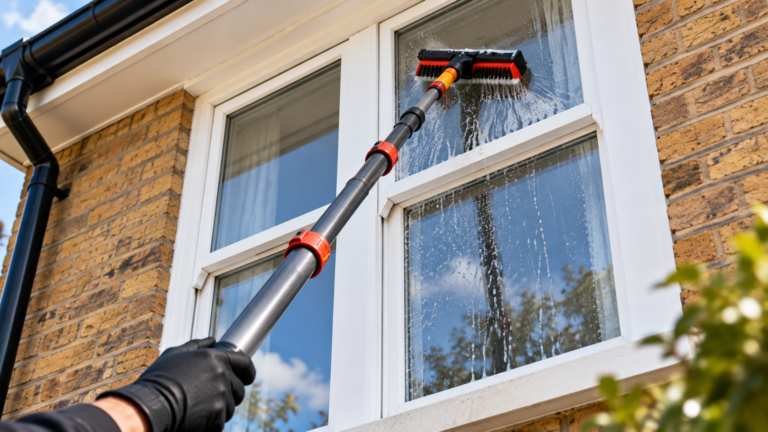
On every residential window clean, we clean the frames, sills and door panels as well as the glass. We use a Reach & Wash purified water system with a water-fed pole, so upstairs frames are cleaned from the ground with no ladders against your walls and no detergent left on the plastic.
We are a family-run, fully insured business with 15 years of experience, working in Bromley, Orpington and across South East London. Call us on 07454 066644 to join our round. If you are not happy with any part of the clean, we come back the same or the following day and clean it again free of charge.