Clean windows let more light into your home and make the whole house look looked after. The method is simple, but a few details decide whether you end up with clear glass or a pane covered in smears. This guide covers what to clean windows with, a five-step method that works on most windows, the common mistakes, and the point where it makes sense to hand the job over.
One thing before you start: a window is more than the glass. Dirt left on the frames and sills runs back onto the glass the next time it rains. That is why we clean them on every residential window clean, and you should do the same at home.
What to Clean Windows With
You do not need special equipment. Most of what you need is already in the house:
- Bucket of warm water: with a few drops of washing-up liquid.
- Soft sponge or window applicator: to wet the glass and loosen the dirt.
- Squeegee: if you have one. A cloth works too, it just takes longer.
- Two or three microfibre cloths: one for washing, one for drying.
- Soft brush or vacuum with a brush attachment: for frames and tracks.
- Old towel: laid on the sill to catch drips.
Shop-bought glass sprays are fine for the inside of windows, where the glass is only lightly dirty. Outside, where you are dealing with traffic grime, pollen and bird mess, a bucket of soapy water does a better job. Keep the washing-up liquid to a few drops, because too much leaves a film that shows up as smears once the glass dries.
Avoid anything abrasive. Scouring pads, the rough side of a kitchen sponge and cream cleaners can scratch glass and dull the surface of uPVC frames.
The Best Cloth for Cleaning Windows
Microfibre. It holds water without dripping, lifts dirt instead of pushing it around, and does not leave fluff behind the way kitchen roll often does.
Keep one cloth for washing and a separate dry one for the final polish. Wash your cloths without fabric conditioner, which coats the fibres and leaves streaks on the glass.
Pick the Right Day
Clean on a dry, overcast day, or start with the windows that are in shade. In direct sun the water dries on the glass before you can wipe it off, and that is where most streaks come from. A dry day also means you are not washing the outside of the house only for rain to splash dirt back onto it an hour later.
How to Clean Windows Step by Step
The best way of cleaning windows at home is to work on one window at a time, so nothing dries before you get to it. This method works for most standard glass windows, inside and out.
- Dust the frames, sills and tracks: Start dry. Brush or vacuum the loose dust, cobwebs and dead insects off the frame, the sill and the track the window sits in, or the first wet wipe turns that dust into mud.
- Wash the frames before the glass: Wipe the frames and sill with the sponge and soapy water. Any dirty water that runs down then lands on glass you have not cleaned yet, not on glass you have just finished.
- Wet the glass: Wet the whole pane with the sponge or applicator, wrung out enough that it does not drip. Pay attention to the corners and the edge where the glass meets the frame, as that is where dirt builds up.
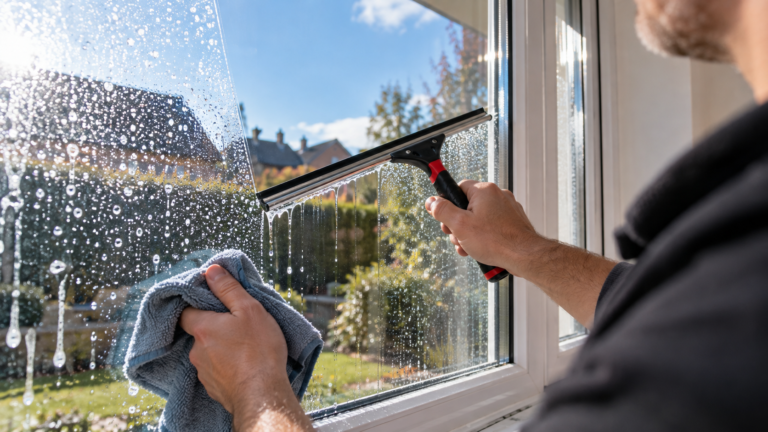
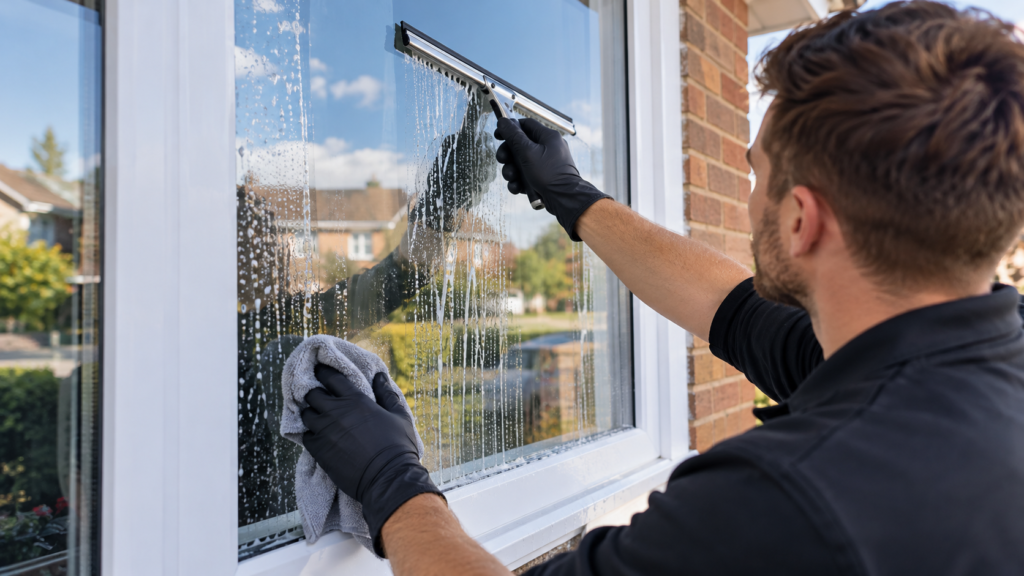
- Work from the top down: With a squeegee, pull down from a top corner in straight, slightly overlapping strokes, and wipe the blade on a dry cloth after each one. With a cloth only, wipe in one direction from top to bottom, then buff dry with your second microfibre cloth.
- Finish the edges and dry the sills: Run a dry cloth around the edge of the glass to pick up the last line of water, then dry the frame and sill. Check the glass from an angle, as smears that are invisible face on often show up when the light changes.
Wiping in circles tends to move the dirt around rather than lift it. Keep your strokes straight whichever tool you use.
Inside vs Outside: What Changes
The method is the same on both sides of the glass. The dirt, the kit and the hazards are not.
Cleaning Windows Inside
Inside, you are mostly dealing with dust, fingerprints and marks left by condensation. A glass spray or a damp microfibre cloth is usually enough, with a small squeegee for larger panes. Move curtains and furniture out of the way and lay a towel on the sill first.
Cleaning Windows Outside
Outside, the glass collects traffic grime, pollen, bird mess and rain spots. Use a bucket of warm soapy water with a sponge or applicator, a squeegee, and a soft brush for the frames. An extension pole helps with the top of taller panes, but any window above the ground floor needs more thought (see below).
Start with the outside, since it is usually the dirtier side. If you clean both sides on the same day, wipe the outside with vertical strokes and the inside with horizontal ones, so the direction of a streak tells you which side it is on.
Common Mistakes
Most disappointing results come down to a handful of habits. To clean windows properly, avoid these:
- Cleaning in direct sun: the water dries before you can wipe it, leaving marks.
- Using too much detergent: extra washing-up liquid stays on the glass as a film.
- Carrying on with dirty water: change the bucket as soon as the water looks cloudy.
- Skipping the frames: dirt on the frame runs back onto clean glass with the next shower.
- Using a dirty or conditioned cloth: it spreads grease and leaves streaks however carefully you wipe.
- Scraping the glass: blades and scourers can scratch it, especially if there is grit underneath.
- Overreaching: leaning out of a window or stretching from a ladder to reach the last corner is how accidents happen.
When DIY Window Cleaning Stops Being Practical
Ground-floor windows are a manageable job for most people. Upstairs is different: cleaning the outside of a first-floor window usually means a ladder, a bucket and both hands busy at once, often on a narrow path or above a conservatory roof. If the only way to reach a window is to lean out of it or to balance a ladder on uneven ground, the job is not worth the risk.
That is the work our vehicle-mounted Reach & Wash system is built for. We purify tap water and carry it in large tanks in our vans, then pump it up telescopic poles with brush heads at the end. The brush scrubs the dirt from the frames, glass and sills, and the window is rinsed and left to dry naturally.
Because the water is so pure, it dries without leaving marks, and no dirty water or cloths used on other houses ever touch your windows. Everything is done from the safety of the ground, including high and hard to reach windows, and we always include your frames, sills and door panels.
Red Point Cleaning Service is a family-run, fully insured business that has cleaned homes and commercial premises across South East London for 15 years, including window cleaning in Bromley and Orpington. Customers on our round get a text alert between 6 and 7pm the evening before we are due, and we carry out the clean the next day, weather permitting. All our work is guaranteed: if you are not happy, we re-clean the same or the following day free of charge.